

A Child-First Response
to Child Abuse
Instead of bouncing between hospitals, police stations, and courtrooms, children get everything in one place — with people trained to listen, protect, and empower them.
A Child Advocacy Center brings the right professionals together so a child only has to tell their story once, in a safe, supportive setting.
The Need in Georgia
The children who walk through CAC doors are facing some of the most serious forms of abuse and trauma. These numbers reflect confirmed and suspected victims served by Georgia’s CACs in FY2025.
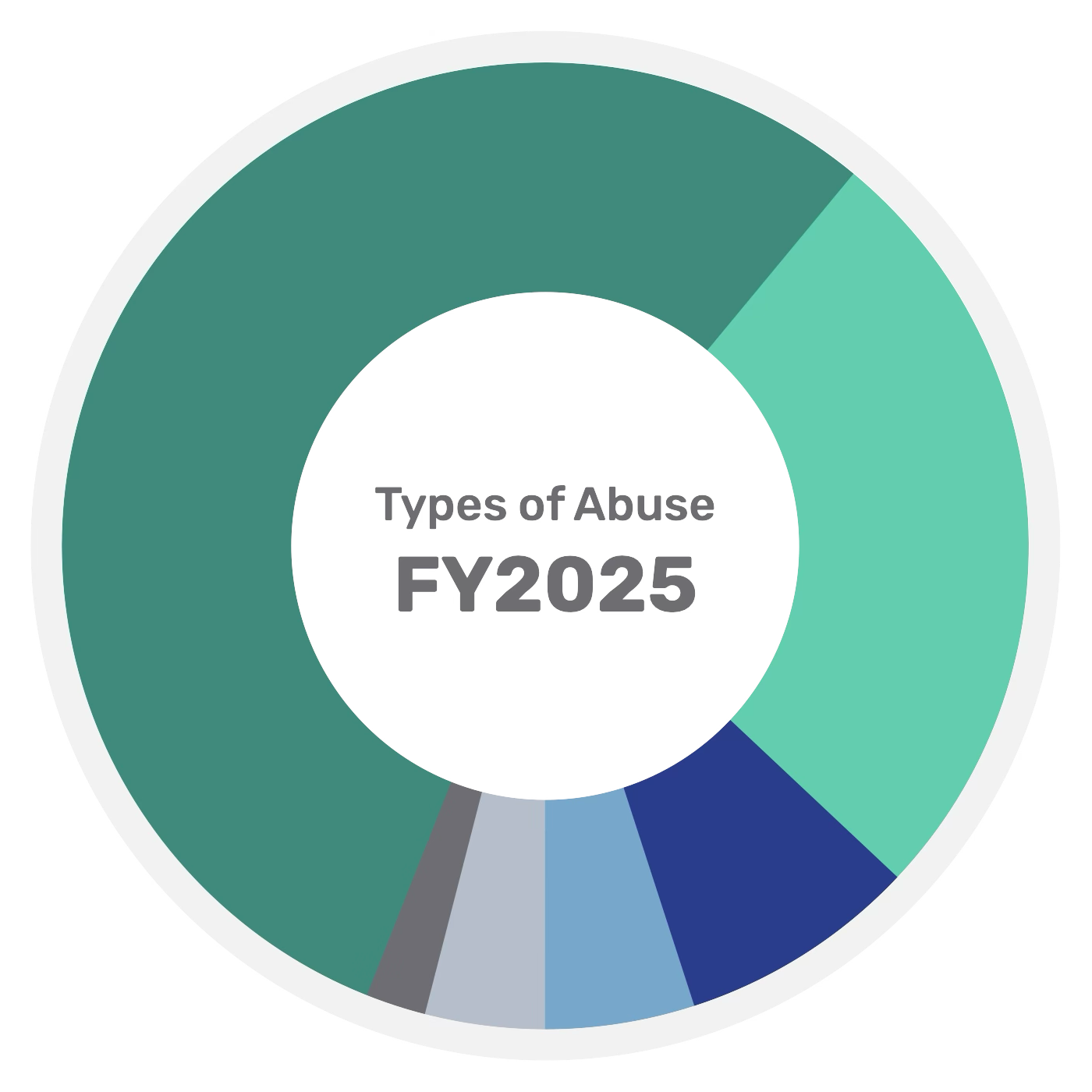
26%
Physical
Abuse
4%
Child Sexual
Abuse Material
8%
Witness to Domestic Violence or Homocide
2%
Commercial Sexual Exploitation of Children
5%
55%
Child Sexual
Abuse
Child
Neglect
Children’s Advocacy Centers (CACs) are uniquely positioned to respond to these crises.
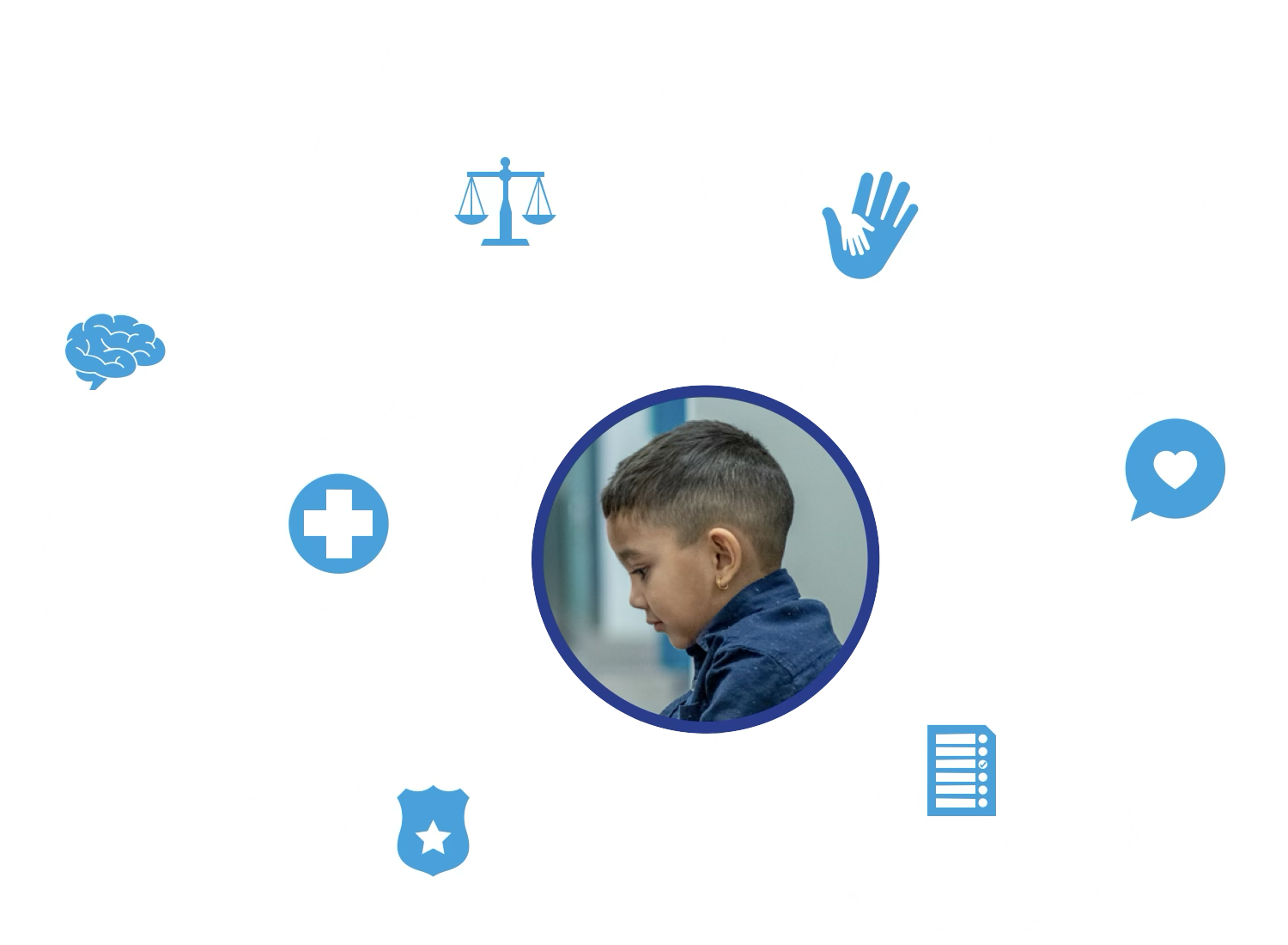
Communities
WITHOUT CACs
Communities
WITH CACs
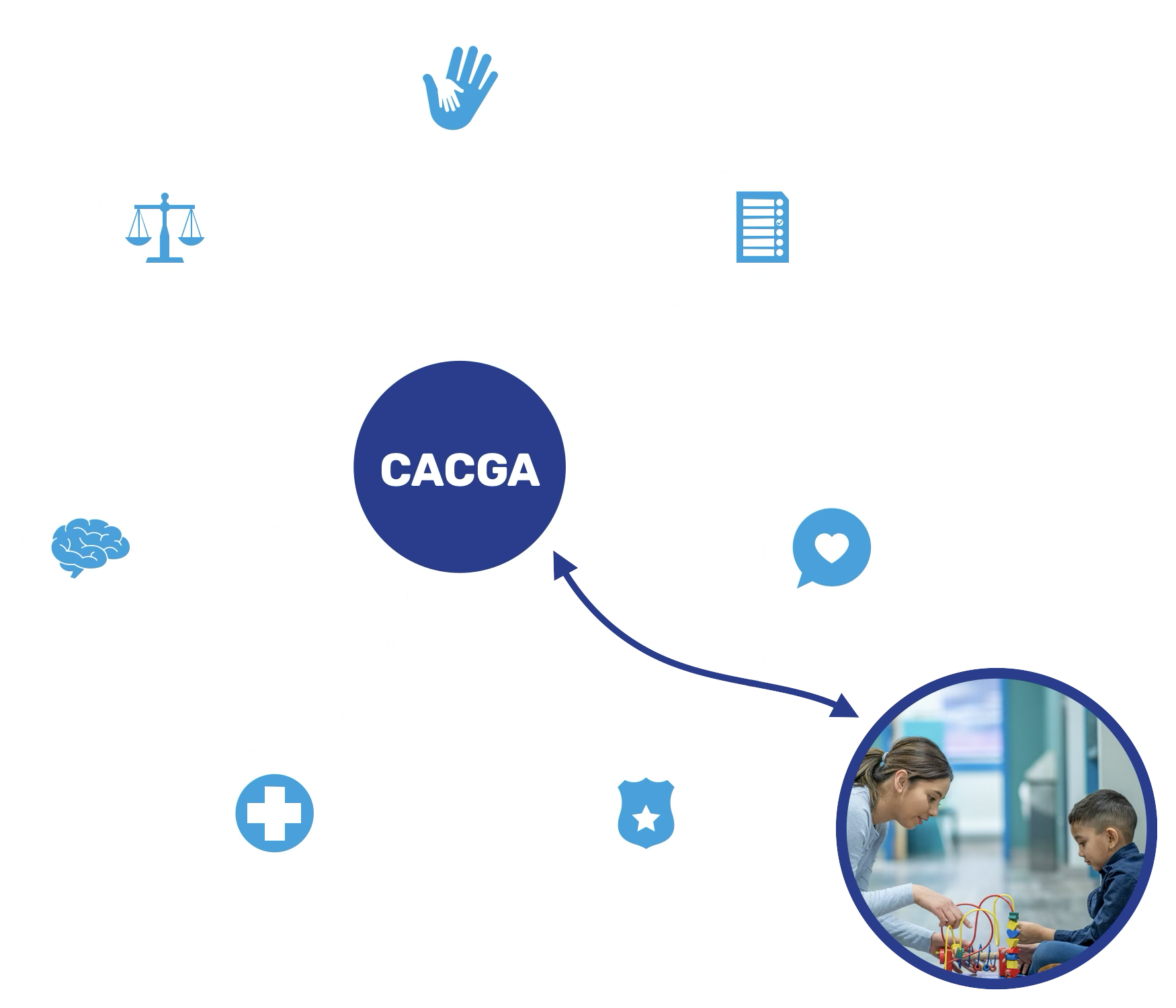
CACGA serves as the statewide coordinating body for the CACs, ensuring quality, consistency, training and funding.
The CACGA network is a best-in-class, nationally recognized model for responding to the crisis of child abuse.
Together, we create a safe path from disclosure to justice and healing.
Core Services
Forensic Interviews
One conversation, handled with care, by a trained specialist who knows how to support children through difficult disclosures.
Medical
Exams
Gentle, trauma-informed care focused on safety, dignity, and accurate evidence collection.
Trauma-focused Therapy
Evidence-based mental health support that restores stability and strengthens resilience.
Family Advocacy
Help for caregivers navigating next steps, available services, and the emotional impact of a child’s disclosure. disclosures.
Case Coordination
Law enforcement, prosecutors, medical providers, DFCS, and mental health clinicians work as one team, not in silos.
Why This Model Works
Child Advocacy Centers are simply good policy — cost-effective, compassionate, evidence-based, and future-focused.

Lower costs
Every $1 invested in CACs saves $3–$4 in downstream public spending.
Faster, stronger cases
Coordinated teams reduce delays and improve justice outcomes.
Better access to therapy
88% of children seen at CACs are referred to mental health services,
Improved school engagement
Supportive care reduces absences and helps kids re-engage with learning.
Long-term stability
Families receive the guidance they need to navigate crisis and begin healing.